A Better Bottle Warmer
This project was completed as part of a class project for Human-Computer Interaction that exercised principles of interface design, need assessment and solution ideation, and the implementation of user testing and feedback.
The baby products market is a multibillion-dollar industry that continuously grows. Products have evolved to improve care and use by a variety of stakeholders, and yet plenty of room for improvement remains. Bottle warmers are an example of such a product. Incorporating principles of human-computer interaction and human factors, this iterative design process generated an aesthetically pleasing product concept capable of meeting the various user requirements.
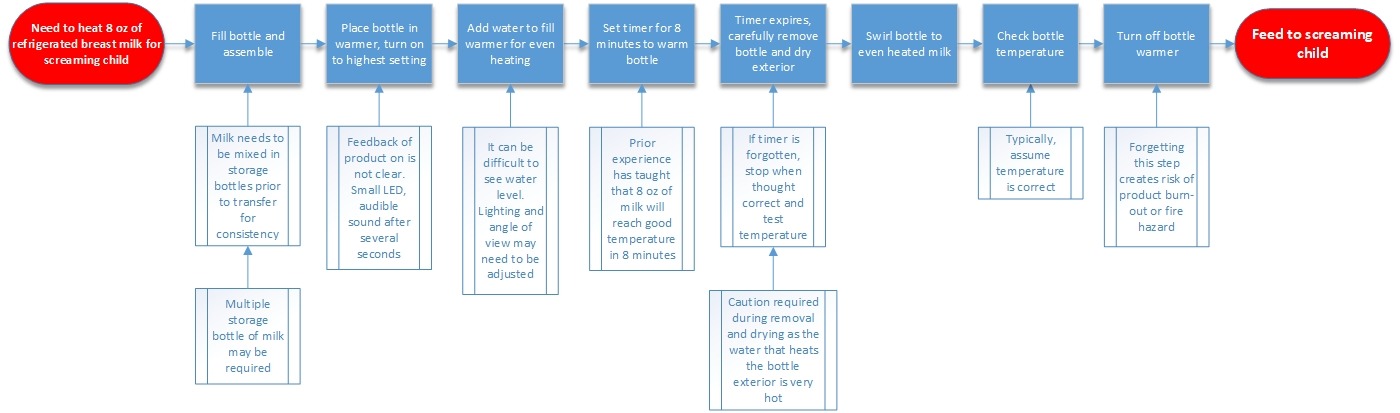
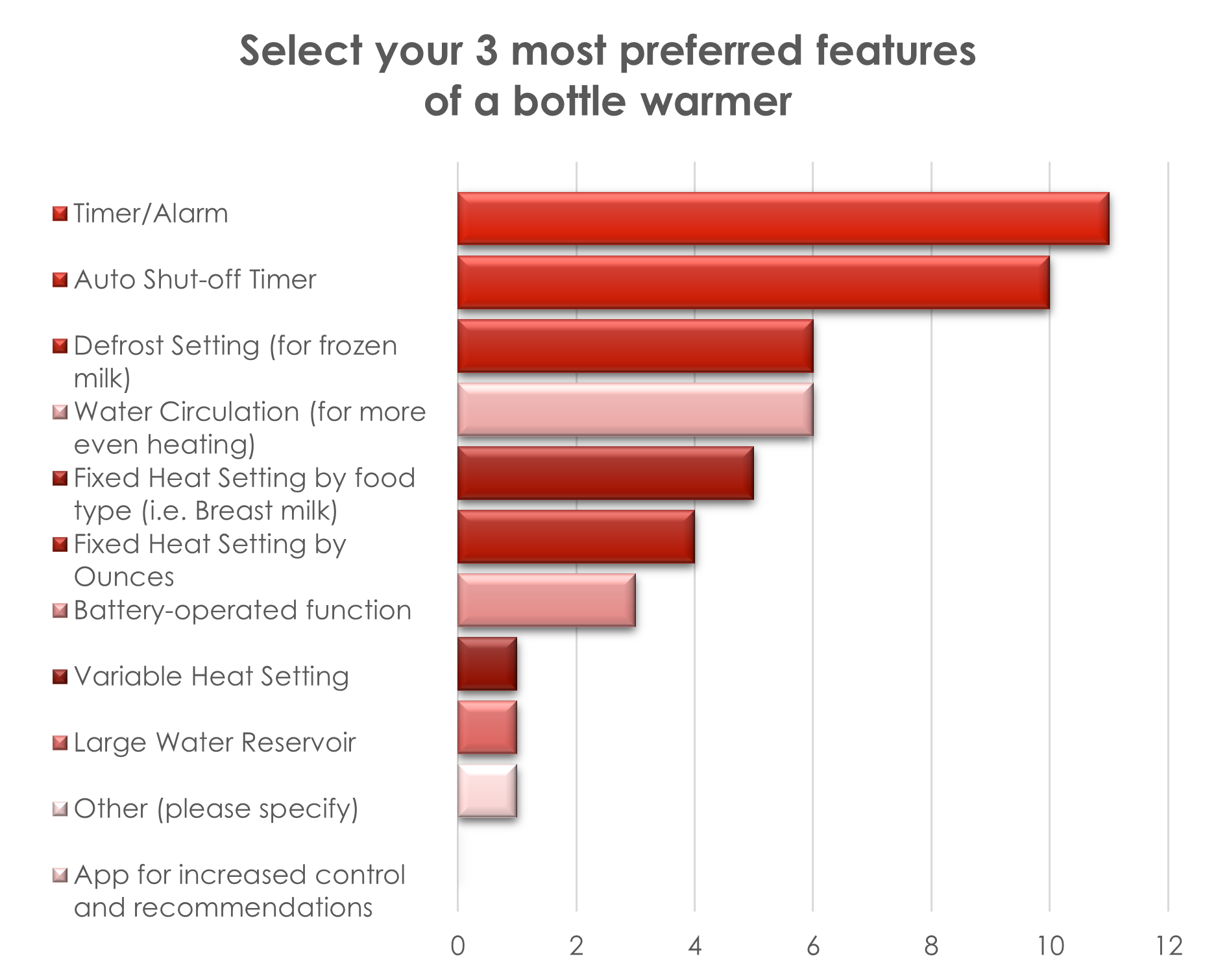
To develop design requirements, contextual inquiry was conducted to establish process and understand areas of improvement directly from users. Direct observation of multiple users of bottle warmers generated the task analysis seen here. Online surveys were conducted to increase voice-of-customer (VoC) inputs and better understand pain points.
Competitive analysis outlined the spectrum of price point vs features. Functional analysis captured universality to bottle brands and efficiency of operation. Functional and non-functional requirements were generated from these research outputs.
Multiple designs were generated from the VoC inputs and user insights. This brainstorming method incorporated aesthetic design and process creation. Several interface designs were generated to test with users for function and appeal to ensure intuitive use and reduced risk of error by users. Functional designs were also created to improve user interaction and creatively solve for user specified needs.
Testing for both areas of development, interface design and functional features, was conducted in randomized order between subjects and requested evaluation of overall appeal as well as specific features of use. Although virtually conducted, interface designs were tested in moderator-guided simulation.
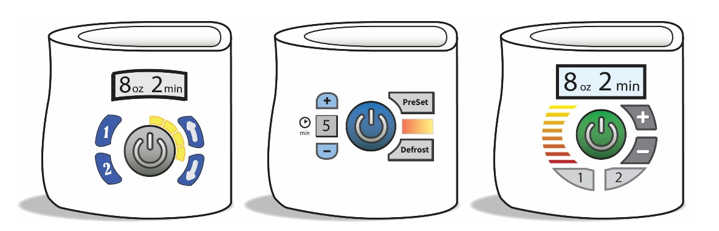
Multiple VoC's, conducted as online surveys and one-on-one interviews, guided several design iterations to eliminate low valued features and emphasize features of improved use and function. The final hybrid design met all critical design features and received positive feedback from user testing.
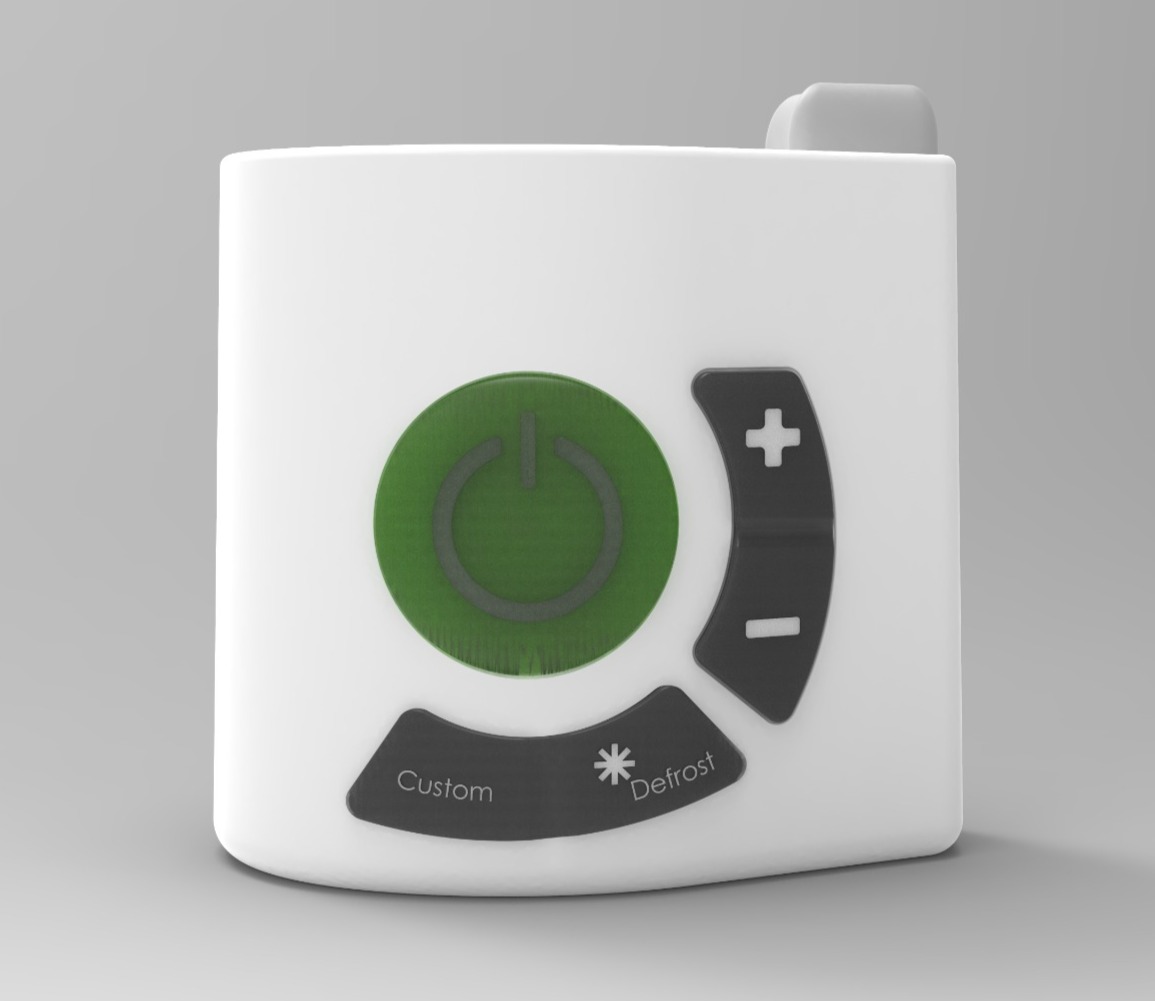
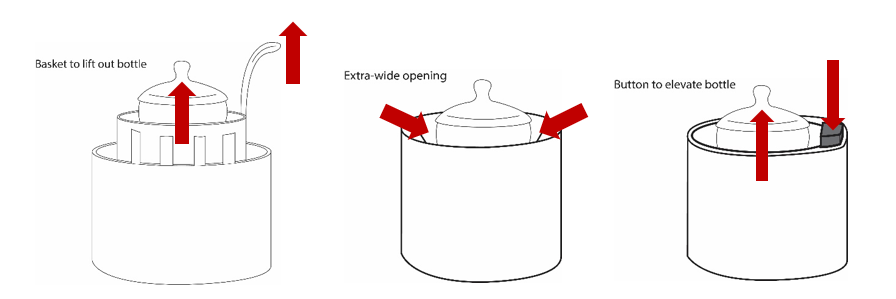
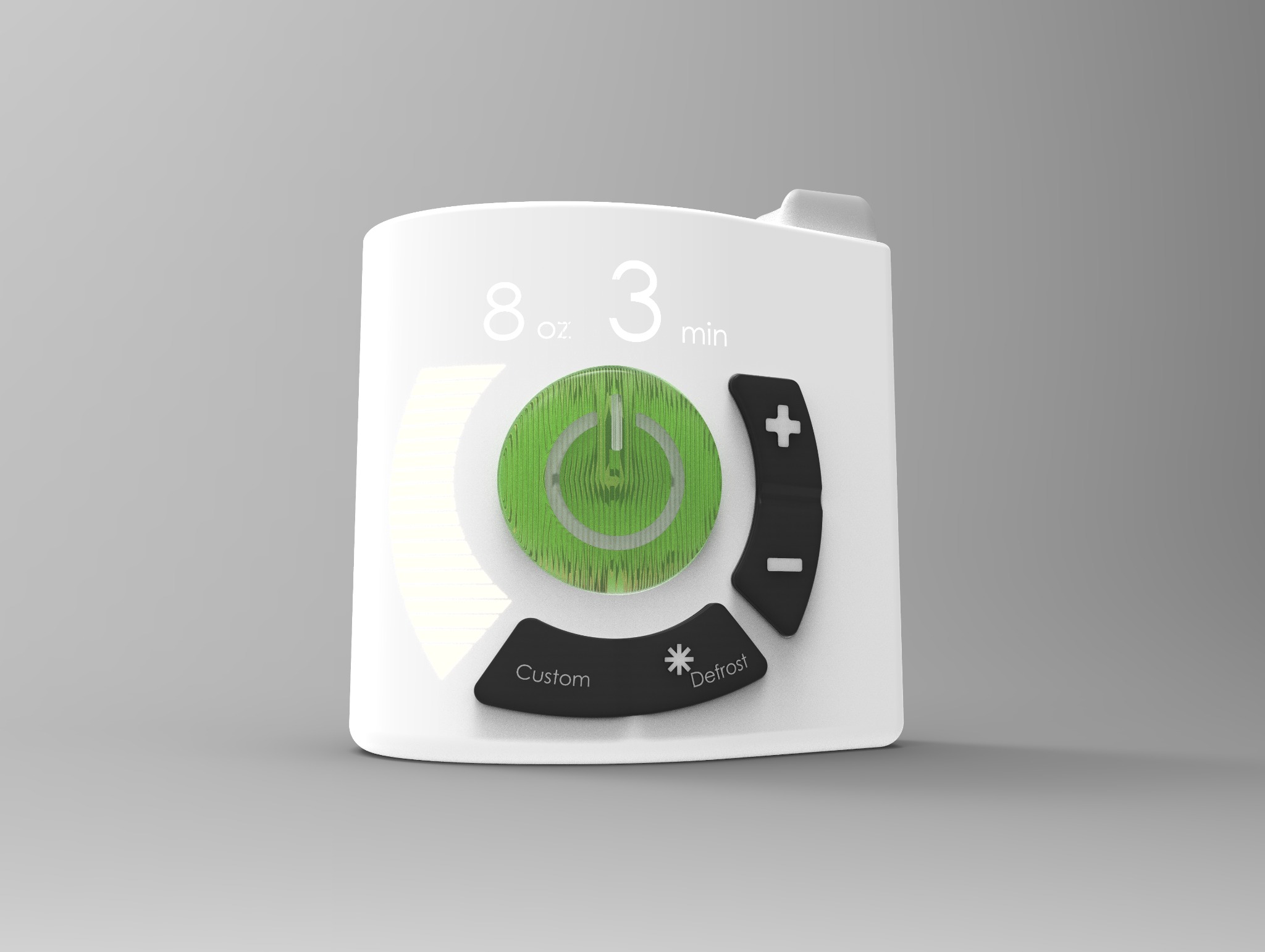
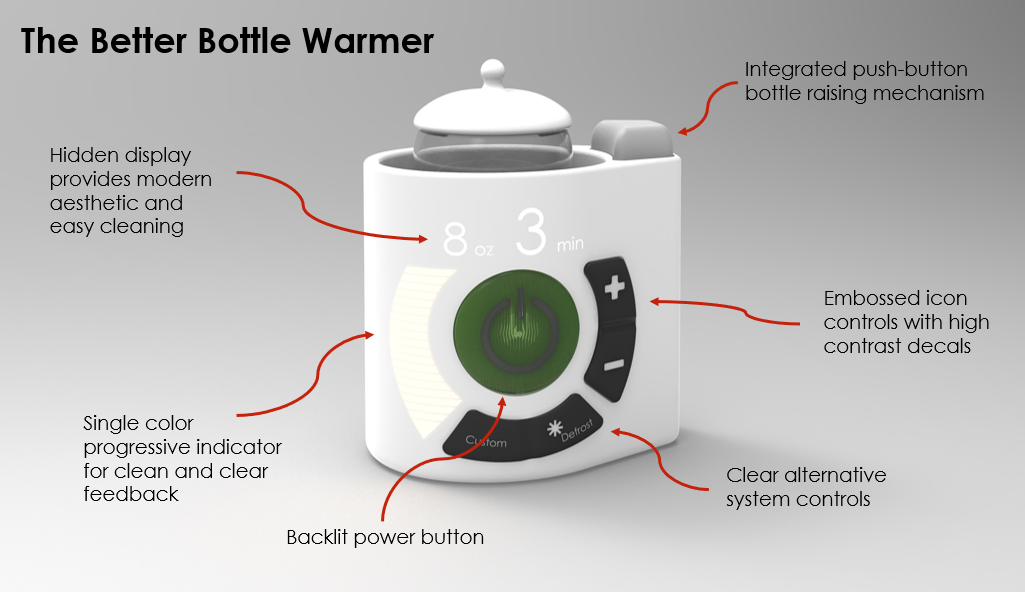
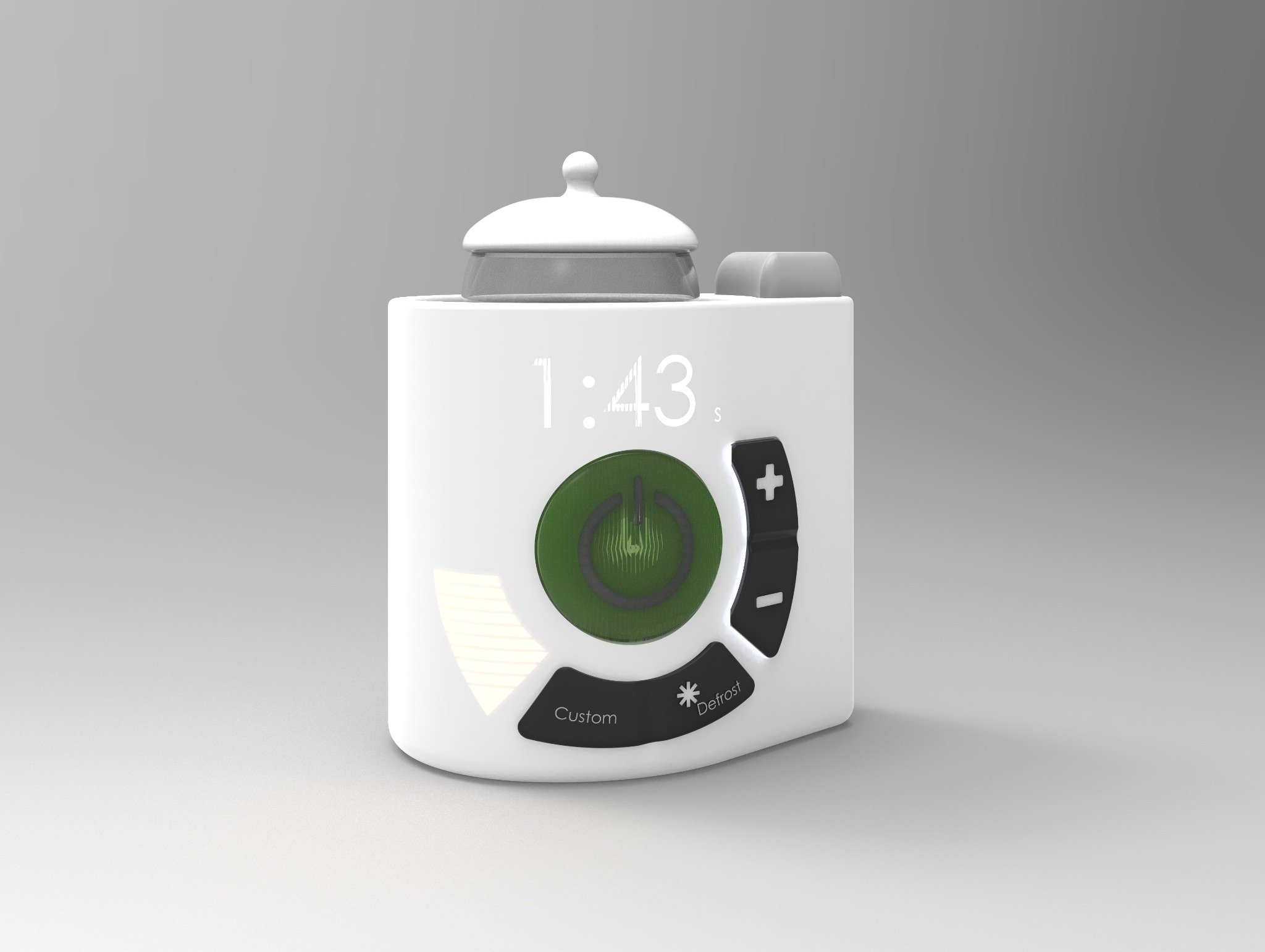
Design features included a hidden backlit display for a clean and vibrant look. An over-sized power button made for quick and easy use with repeated system settings. An integrated bottle raising mechanism improved retrieval of bottles from the water bath. Large rubberized buttons with clear icons of function. The time display and vertical progression bar provide clear and redundant feedback to the warming cycles progression.
"Luxurious" and "an ideal innovation." Intuitive use and safety were highlights of user feedback. This improved bottle warming design incorporates modern design with human factors principles to create an intuitive and pleasant experience during a stressful but important stage of life.